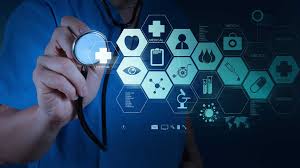
In an era of constantly expanding state-of-the-art technology in practically every aspect of people’s lives, healthcare organisations and practitioners require technological systems that not only expedite treatment delivery but also speed up routines and ultimately improve patient outcomes. Applications for health care can be used for a variety of objectives. What are the benefits of creating a medical app, and how do you go about doing so? What does it mean to create custom software for the healthcare industry?
The performance of the health sector is today one of the most essential factors. Technological progress is more challenging than it has ever been. Customers expect transparency and evidence throughout the process. As a result, the healthcare industry adopts a patient-centered strategy, which enhances patient care and satisfaction.
What exactly is healthcare, and how does it work?
Healthcare software promotion encompasses a wide range of applications. However, it is frequently characterised as the development of knowledge-based IT services that provide decision support, advice, assistance, and feedback to healthcare practitioners.
These solutions simplify and improve operations management while also improving the quality of care given to patients.
It is critical to emphasise that the purpose of healthcare technology advancement should not be to remove decision-making authority from educated practitioners. Many people will profit from this since it will allow them to make real-time judgments, eliminate routine tasks, and rationalise patient care and administration. It will also be advantageous.
The Features of a Medical App:
A medical application must have the following features:
Signup:
Users must first register for the app by providing their phone number and e-mail address. The goal of this feature is to keep track of who uses your applications.
Observation
Tracking is a crucial feature of health apps because it makes it easier for users to use them and keeps track of how often they do so. It can also be used to keep track of fitness and recovery exercises.
Conditions of Use
Customers can rely on this function to provide drug intake records and appointment schedules. Reservations, for example, provide a number of integrated options that make it easier for customers to plan and encourage interaction between users and healthcare providers.
Please make a payment.
Them value time-saving services, therefore having a payment option is critical since it allows customers to purchase the service quickly and expect it to arrive on time.
Reports are distributed. Push
Reminding customers or patients of impending appointments is usually a smart idea. The ‘push alerts’ option is appropriate for online video visits. Customers can send notifications up to ten minutes before a contact is made.
Chatting that actually works:
Users can interact with patients and observe real-time text exchanges. It also collects a large amount of information in order to improve warnings.
Examinations and assessments
This is a must-have item because it is directly related to visible evaluations and readings from real customers, which assist current shoppers in finding trustworthy doctors or clinics.
Place of residence
Aside from the user experience, Google Maps integration or other third-party map providers can help medical workers locate a patient in an emergency, advanced healthcare data integration strategy which can save a user’s life. Furthermore, the user experience has been improved.
There are numerous advantages to custom software development.
These are only a few of the many benefits of healthcare software development for the healthcare industry.
• Establishing a diagnosis (advanced)
The healthcare industry has the capacity to evolve in order to deliver better diagnostics, software, and technology while also providing effective operations management.
• Money to be saved
It lowers premiums and lets patients to communicate with doctors without having to see them face to face. Significant amounts of manual labour, on the other hand, are not required in the field of health.
• The expectations of patients are increasing.
The success of any industry is dependent on offering the best possible customer service. Technology has increased the need for high-quality service and treatment from health-care providers.
• Data privacy and security
Every day, the healthcare industry generates a massive volume of highly customised data. Data security is also a key issue in this industry. The goal of hybrid apps is to protect patient data against ransomware and data breaches. Patients are comfortable sharing personal information with a customised programmer.
Every cloud, email service provider, search engine, chatbot, website, and system now complies with HIPAA to ensure full data protection.
• There aren’t any limitations in place.
It makes no difference how distant a patient or practitioner is from here. If you have access to the Internet, you can still communicate with each other. Patients who require remote care will continue to receive treatment.
• A platform-agnostic and integrated framework
The one-of-a-kind medical software combines all of the workflows that the healthcare industry use on a daily basis. The various programmes can handle human resources, finance, OPD, inventory, and other simple and sophisticated tasks.
Medical Record Electronics (MRE) is an acronym for Medical Record Electronics (EHR)
What role does hl7 play in healthcare? The most easiest approach for health practitioners to track patient information is through an electronic health registry (EHR), often known as an electronic medical record (EMR). EHRs save patient-centered records in real time, allowing registered users to rapidly and securely access information. Medical history, diagnosis, medications, therapy plans, immunisation dates, allergies, radiographic images, test results, and research findings are all part of the package.
Telemedicine is being used.
Telemedicine is a growing difficulty that is perfect for customised software solutions in an era of lock-downs, quarantines, and the decrease of the susceptibility of at-risk patients. By 2025, the telemedicine market in the United States is anticipated to be worth $64 billion.
Some doctors offer patients the option of attending a video meeting instead of travelling to the hospital online. This may be beneficial to those who have been sick for a long time and refuse to go to the hospital. These devices must provide face-to-face conferencing, screen sharing, and encrypted image transfer.
Drugstore
The drugstore is essentially a shopping mall with multiple levels. Investment inflow, wholesale contracts, inventories, case management, and prescription lists are all part of management. Regulated medicines, such as patient privacy, are typically subject to regulations. Custom pharmacy software can help pharmacies keep track of patients and medications, streamline procedures, and comply with regulations.
Medical providers also desire a safe way to deliver electronic pharmaceuticals to pharmacies. This is typically linked to the EHR, allowing the clinician to use only one piece of software.
Systems for Hospital Management
It looks that creating healthcare software to manage any aspect of a hospital’s operations, such as laboratories, workers, and reception, is as straightforward as feasible. It keeps track of all hospital administrative processes, including hospital billing, insurance processing, and patient record and clinical information management.
Management tools for the income cycle
Despite the fact that medical care and maintenance are prioritised by healthcare practitioners. Data integration solutions for healthcare employees require an easy approach to assess benefits, file accounts, manage receipts, process claims, and analyse results in order to give a consistent financial picture. During a visit, a patient portal system can immediately check a patient’s insurance status and/or submit a paperless bill via a simple online payment portal.
Information about the author:
The author is a well-known medical device expert in the United States. His personal healthcare software development company is currently expanding. Finally, the author mentions a company called folio3 that has excellent reviews and an attractive portfolio, implying that Folio3 is a software development firm.
 Care animal with Tech