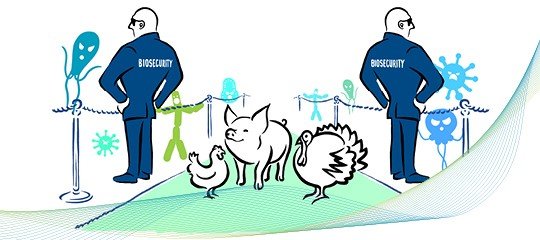
You need a biosecurity plan if you run a business that involves livestock. No matter if your business is a small scale or large scale business. An effective biosecurity plan must cover all the steps that you would take to eliminate all the risks when moving animals on and off your farm.
A biosecurity plan involves the protection of plants, animals, the surroundings, and the health of people from harmful and infectious pests and diseases. It prevents viruses and diseases from entering your property and making sure the existing ones get eliminated.
Why do you need a biosecurity plan?
Diseases can easily enter your farm if you have poor biosecurity which will result in money loss and loss of consumers’ trust. Having a biosecurity plan will ensure good health of all your animals and the production of high-quality products in order to meet the requirements of the market.
What does a biosecurity plan involve?
A biosecurity plan will help you to deal with several diseases and to keep them away from your property. It involves all the steps that are needed to make the environment of your farm healthy and safe for your crops and animals.
The plan should involve all the instructions to eliminate and minimize and potential risks. The actions included in the plan must be:
- Before animals are moved on the farm
- While animals remain on the farm
- When the animals are moved off the property
The biosecurity plan must have proper information about how regularly you check your animals for health issues. During periods of higher risk, such as calving or lambing, you must check the animals more often than usual. It is better to update the plan according to the requirements every once in a year.
How many levels of biosecurity are there?
Cattle producers must know about the level of biosecurity to understand what plan they need for their farm and what practices must they adopt to improve their farm’s performance.
Primary level biosecurity
Farms are located far away from places that are publically dense. Facilities for animals are located in isolated areas. It ensures that harmful diseases that can enter into farms because of its populated surroundings are kept away.
Secondary level biosecurity
It is more about the physical structure of the farm. It involves facilities including fencing, design, and drainage facilities. It involves steps that ensure the prevention of diseases by adopting practices that guarantee good hygiene on the farm property. Movement of equipment, vehicle, and hygiene of all the workers of the farm is also made suitable to prevent the risk.
Tertiary level biosecurity
Infection carriers are avoided and in the case of any emergency, necessary steps must be taken to ensure complete elimination of the risk.
Cattle producers should have a clear idea about what type of biosecurity plan they should adopt for their farms.
How often should a bio security plan should be updated?
A biosecurity plan must be reviewed every 12 months and necessary changes must be made in the plan according to the needs of the farm and animals. It is the responsibility of all farm owners to ensure that farm practices are well-maintained and free from risks that might harm the health of animals and cause loss. The performance of the farm must be observed regularly to identify any alarming situation. Before buying animals, asking for their health records can also help farm owners to minimize the risk factors.
All the steps involved in the biosecurity plan must be followed and all workers must know about every change made to the plan.
 Care animal with Tech